


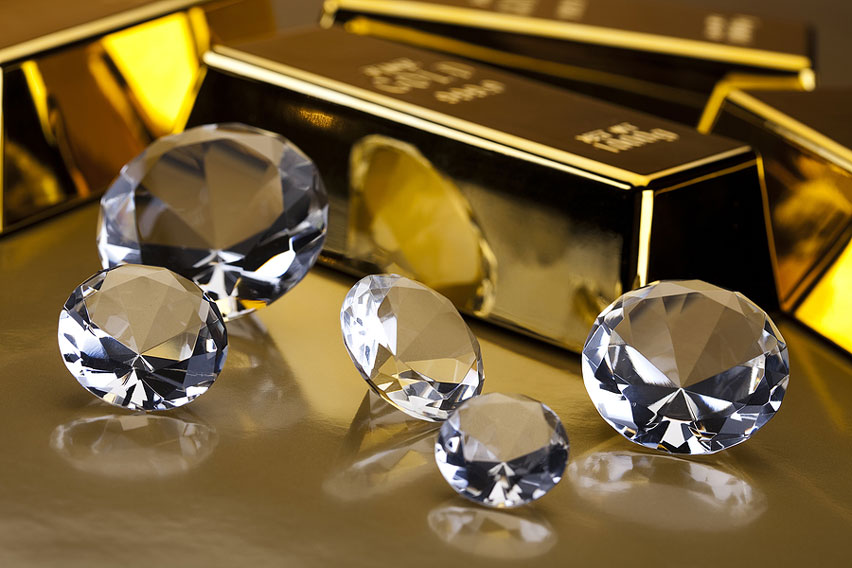
I’ve been working with jewellery for over fifteen years now, and if there’s one question that never seems to go away, it’s this: what holds more value — diamonds or gold?
It’s a question I’ve heard from brides-to-be, seasoned investors, and even friends cleaning out their jewellery boxes. And honestly, I get it. With all the sentimental weight we attach to jewellery — engagements, anniversaries, heirlooms — it’s natural to wonder what’s actually valuable beyond the sparkle.
But here’s the thing. The diamond vs gold value debate isn’t as straightforward as most people think. There’s history, economics, and even psychology tangled up in it. So let’s unpack it, piece by piece.
The Emotional vs The Tangible
Before we even get to numbers, it’s worth saying: diamonds and gold carry very different kinds of value.
Diamonds are emotional — they’re about love, status, and symbolism. A diamond ring says something about the person wearing it. Gold, on the other hand, is practical. It’s been used as money for thousands of years and still underpins parts of the global financial system.
When a customer asks me which one is “worth more,” I usually ask what they actually mean. If they’re asking which one holds value better over time, the answer tends to lean toward gold. But if we’re talking about emotional impact, diamonds have no competition.
Still, emotions don’t pay the bills. So let’s look at the actual numbers.
How Diamonds Really Work in the Market
I’ll be honest — most people are shocked when they discover how the diamond market operates.
Unlike gold, which has an open and transparent global price that fluctuates daily, diamonds don’t have a universal standard. Their prices are influenced by size, cut, clarity, colour, and brand — and that makes them highly subjective.
You might not know this, but the diamond trade is also heavily controlled by a few big corporations. For decades, companies like De Beers managed supply and demand by strategically limiting how many stones reached the market. That artificial scarcity kept prices high — and the illusion of “rarity” alive.
But the world has changed. Lab-grown diamonds, ethical sourcing movements, and shifting consumer preferences are reshaping the industry. Younger buyers often care less about whether their stone came from the ground and more about sustainability and transparency. That’s putting downward pressure on resale prices for traditional mined diamonds.
So yes, diamonds still dazzle — but as an investment, they’re not what they used to be.
Gold: The Reliable Old Friend
Gold, meanwhile, tells a different story. It’s not trendy, but it’s timeless.
Every ounce of gold has an internationally recognised value, updated every minute across global exchanges. That means if you own a gold bangle in Sydney, it’s worth roughly the same as it would be in London or New York.
Historically, gold has held up well during inflation, recessions, and even wars. Investors call it a “safe haven” for a reason. When markets wobble, people buy gold — not because it’s shiny, but because it’s solid.
Over the past century, gold’s price has steadily increased. There are fluctuations, of course, but it always seems to bounce back. Diamonds, by comparison, don’t have that same track record. They can be hard to resell, and their value tends to depend on what someone’s willing to pay, rather than a global benchmark.
That’s why, when customers come to my workshop asking what to keep and what to sell, I often suggest getting their gold appraised first. It’s tangible, measurable, and, frankly, easier to liquidate.
The Hidden Costs of Owning Diamonds
Here’s something I learned the hard way when I first started in the industry: diamonds don’t retain value the way people assume.
When you buy a diamond ring at retail, part of what you’re paying for is the brand, the marketing, and the craftsmanship. The actual stone might only make up half (or less) of the price tag.
So when it comes time to resell, people are often disappointed. Most jewellers won’t pay anywhere near the original purchase price. It’s a bit like buying a new car — the value drops the moment you leave the showroom.
Gold doesn’t have that problem. If you walk into a gold buyer’s shop with a necklace, they’ll weigh it, check its purity, and pay you based on the live gold price. No arguments, no emotion — just straightforward value.
If you’re curious how that process works, there’s actually a great piece explaining the nuances of diamond vs gold value. It dives deeper into how each material behaves financially over time, and honestly, it’s a worthwhile read if you’re thinking about selling.
Environmental and Ethical Sides of the Debate
Now, this part of the conversation doesn’t get enough attention — the environmental cost.
Mining, whether for gold or diamonds, leaves a mark. Open-pit mines, water pollution, and carbon emissions are all major concerns. But in recent years, more Australians have started thinking about where their jewellery actually comes from.
Gold, for instance, can be recycled indefinitely without losing quality. That’s why selling unwanted pieces can be surprisingly eco-friendly. I’ve worked with several Sydney gold buyers who now promote gold recycling as a way to reduce waste and limit the need for new mining operations.
Diamonds, however, are trickier. Lab-grown stones are more sustainable than mined ones, but they’ve also complicated the resale market. If anyone can make a perfect diamond in a lab, what happens to the value of the ones dug out of the ground?
That question keeps a lot of jewellers up at night — including me.
The Role of Sentiment and Perception
I remember one client — a retired nurse — who came in with her late mother’s engagement ring. It had a small, slightly cloudy diamond set in a thin band of yellow gold. By modern standards, it wasn’t worth much. But emotionally, it was priceless.
She asked if she should sell it, and I just couldn’t give her a straightforward answer. Because that’s the thing about value — sometimes, it’s not about dollars. It’s about the stories we attach to the objects we love.
Gold and diamonds both tap into that human desire for permanence. They don’t rust, tarnish, or decay. They endure, just like memories.
But from a purely financial point of view, sentiment doesn’t translate into market price. And when it comes to raw numbers, gold tends to edge ahead.
Market Trends: What the Future Might Hold
If I had to make an educated guess, I’d say gold’s long-term value will continue to grow steadily, while diamonds will remain volatile.
Global uncertainty — wars, inflation, digital currencies — tends to push investors back toward tangible assets like gold. Meanwhile, the diamond industry faces challenges from lab-grown production and changing consumer attitudes.
Younger generations, especially Gen Z, seem less interested in traditional “status” symbols and more in ethical consumption. They’re happy to buy a lab-grown diamond that’s visually identical to a mined one, often for a fraction of the cost.
That shift could mean the resale market for natural diamonds continues to soften over time. Gold, though, isn’t going anywhere. It’s too deeply embedded in global finance, technology, and culture to lose relevance.
A Personal Take: What I’d Choose
If I were forced to pick — gold or diamond — I’d choose gold, every time.
It’s not as flashy, sure, but it’s dependable. I can melt it down, reshape it, or sell it anywhere in the world. It’s a physical store of value, not just a decorative one.
Don’t get me wrong — I love diamonds. There’s nothing like the fire and brilliance of a perfectly cut stone. But as an investment, I’ve seen too many clients lose money expecting them to perform like gold.
The best advice I can give? Buy diamonds for love, and gold for value.
A Few Practical Tips if You’re Thinking of Selling
If you’re sitting on old jewellery and wondering what’s worth keeping or cashing in, here are a few simple things I’ve learned over the years:
- Get independent valuations. Don’t rely on sentimental guesses or retail prices. A professional appraiser can tell you the actual market value of both your diamonds and gold.
- Understand the purity. Gold comes in different karats — 9k, 14k, 18k, 22k — and the higher the karat, the more valuable the metal.
- Check the market. Gold prices fluctuate daily. Keep an eye on the current rate before you sell.
- Choose ethical buyers. Whether you’re dealing with pawnbrokers or gold buyers, make sure they’re licensed and transparent.
- Don’t rush. Sometimes it’s worth holding onto a piece if gold prices are trending upward.
Wrapping It All Up
At the end of the day, the diamond vs gold value conversation isn’t just about economics — it’s about meaning.
Gold is the quiet achiever: dependable, universal, and intrinsically valuable. Diamonds are emotional, symbolic, and undeniably beautiful, but their financial worth depends heavily on perception and market trends.
If you’re looking to invest or sell, gold tends to win on practicality and long-term stability. But if you’re looking for something that represents love, milestones, or family history, diamonds still hold their own unique kind of worth.
Maybe the real answer is that you don’t have to choose. Both tell a story — one of enduring beauty, the other of enduring value. And when they come together, as they often do in a ring or pendant, they create something that’s both emotional and eternal.